PEGA(KA) — a novel technology for integrated energy optimization and nitrogen reduction in sewage sludge treatment
Product Description
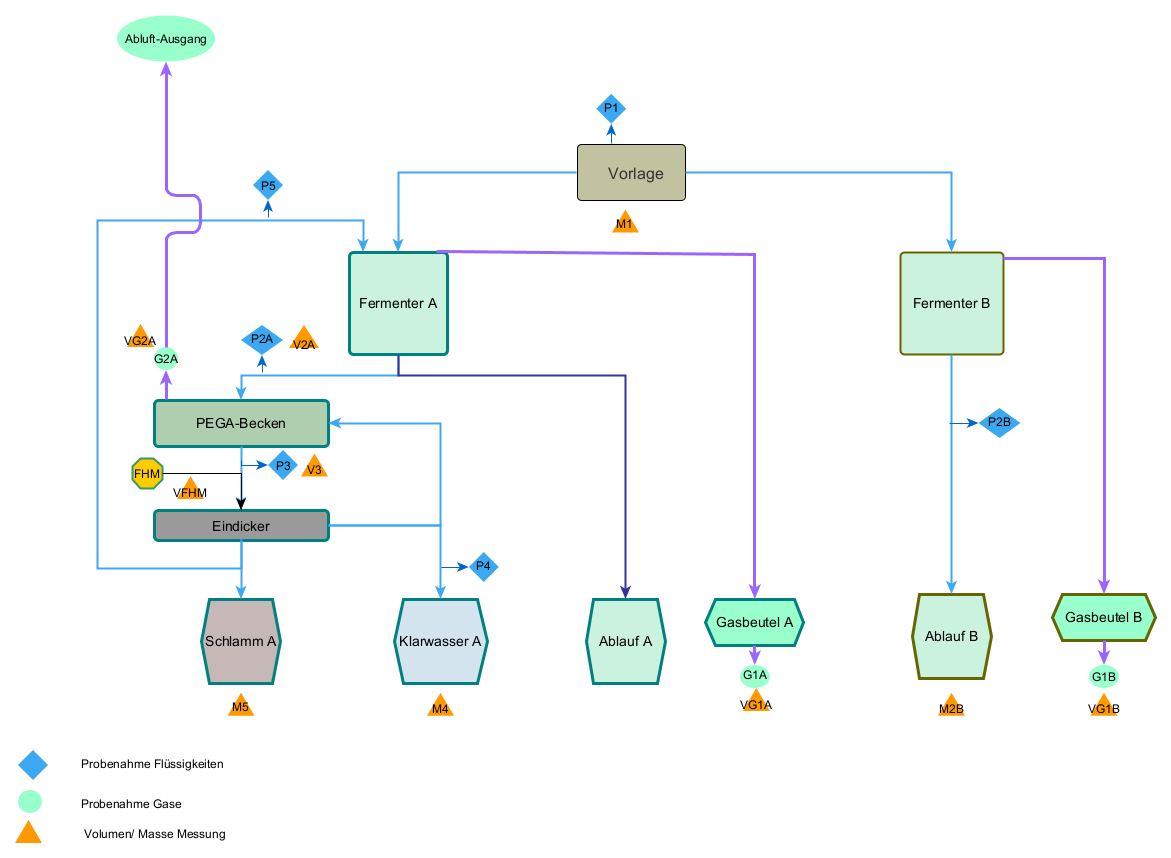
In mesophilic anaerobic sewage sludge stabilization, only about 50% of the organic matter is degraded. At the same time, this degradation releases a large portion of the bound nitrogen, resulting in a high nitrogen re-entry into the wastewater treatment process via the recirculated sludge water. The PEGAKA process aims to significantly increase the organic content while simultaneously reducing the nitrogen re-entry. At the heart of the process is the recirculation of the digested sludge through an anaerobic stage with additional thickening. Implementations to date demonstrate the process’s effectiveness, although the underlying biochemical processes have not yet been fully elucidated. The goal of the project is therefore to conduct a targeted investigation and elucidation of the processes taking place at both the process engineering and microbiological-chemical levels. In the Department of Microbiology, we investigated the organisms involved and the microbiological conversions.
Project Leader for the MNF Subproject: Prof. Dr. Mirko Basen
Project Staff Member: M.Sc. Michelle Lemke
Project Duration: June 1, 2024 – May 31, 2026
Project partners: PEGA: Main Project 61480027 (Prof. Tränckner) WL contract from Pre-Entec
Prof. Dr.-Ing. Jens Tränckner, Faculty of Agricultural and Environmental Sciences, Rostock
Pro-Entec Gesellschaft für Umweltschutz mbH, Hauptstraße 154, 63829 Krombach